Link to the article on the Times Colonist website
After a public hearing that stretched over four nights and saw hundreds of residents weigh in, council voted 5-3 to approve the new blueprint for growth in the city.
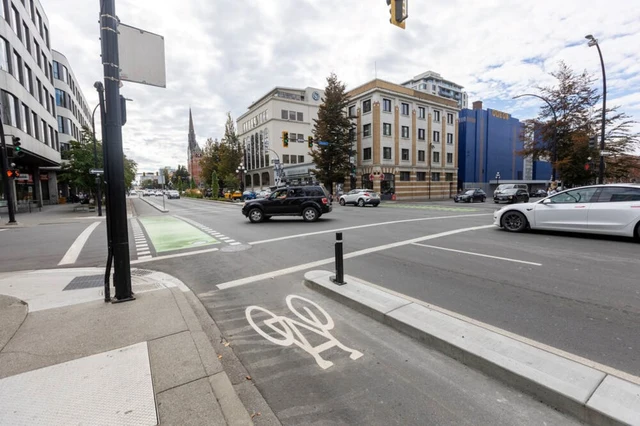
The City of Victoria has a new Official Community Plan.
After a public hearing that stretched over four nights and saw hundreds of residents weigh in—while thousands more filled in surveys and sent emails— council voted 5-3 Thursday night to adopt bylaws that will establish the new blueprint for growth in the city. (The nine-member council was down one, as Coun. Matt Dell was absent.)
“This is not perfect, let’s be frank,” said Mayor Marianne Alto. “But there is a vision here. It’s a vision of a city that I think recognizes there are different ways to celebrate culture and faith and heritage and all of the different stories that we’ve heard through all of these different evenings.”
Alto said the plan, which she stressed is expected to evolve, will make the city more welcoming, diverse and sustainable, and brings “intentionality” to growth, which she calls the responsible way to do it. “Change is inevitable. And as I’ve said repeatedly, change is something that I’d rather have not be random.”
In the works since 2023, the OCP redraft attempts to modernize and streamline a rezoning process that has not been overhauled in 40 years, with the goal of speeding up the pace of housing development.
The intention is to drastically cut the number of zones in the city, thereby reducing the number of rezoning applications the city has to deal with.
According to one draft document, the city currently has 900 site-specific zones, 18 schedules and a complex web of regulations and definitions.
The OCP includes guidelines to allow four-storey projects in most areas, and six-storey and taller projects in strategic locations near transit, as well as infill in all residential areas via homes with suites, conversions to townhouses and four-storey apartment buildings.
The plan focuses intensive development on transportation corridors and earmarks priority growth areas around the city. It also includes new tenant protections and a new amenity-cost-charge program that will allow the city to collect funds from developments to defray the cost of amenities.
It sets a target of expanding the city’s tree canopy to 40% coverage from the existing 30% by 2050.
Coun. Dave Thompson said the new OCP will help address the city’s estimated shortage of 8,000 homes—a shortage that drives up costs. “We often hear the claim that what we actually have is an affordability shortage, but the truth is, we have both, and the housing shortage causes the affordability shortage.”
Thompson said the goal is to ensure Victoria is a place where “all sorts of people can thrive, not just the wealthy.”
“It’s about having a city where workers can find jobs and can afford to live in Victoria, where seniors can age in place, where kids can get to school safely, where we welcome immigrants, newcomers, and diversity, where young adults can get a start on their careers and families.”
Coun. Jeremy Caradonna added that the OCP is designed to address multiple challenges, from climate change and the housing shortage to sustainable transportation and creating space for parks, arts and culture.
Combined with the city’s work on community safety and well-being, the new OCP will help Victoria become the “most prosperous, the safest, and the most sustainable city in North America,” he said.
“It might not become the most affordable, but this plan does set us on a course to become less un-affordable while creating the conditions for greater housing choice. This is the pathway to creating the city of the 21st century.”
Caradonna said he was moved by input from young people who have lost hope of being able to afford to live in the city.
He noted that the plan includes levers to tackle the lack of non-market housing through bonus density—giving developers increased density in return for providing non-market housing units—while fast-tracking and removing red tape for non-market projects.
Councillors Marg Gardiner, Stephen Hammond and Chris Coleman all voted against the motion Thursday night.
Gardiner said the four-night public hearing convinced her the public wants council to press pause. “They want their voices heard and changes made to the plan.”
Hammond suggested postponing approval until the OCP could be amended to reflect actual housing need based on better population-projection data, but that failed when only he and Gardiner supported it.
“We know the original population projections are way off and yet we continue to distort our city’s building plans based on these outdated numbers,” Hammond said, calling that “municipal malpractice.”
The city’s senior planner, Lauren Klose, said legislation requires the OCP to take into account the city’s most recently approved housing needs report rather than B.C. Stats population projections, which change frequently.
Hammond said the city is experiencing an affordable-housing crisis, yet policies in the plan would encourage developers to evict tenants in order to turn moderately priced rental buildings into new, more expensive units.
“To go ahead with this plan knowing full well this will hurt the most vulnerable tenants, I believe this is cruel,” he said.
Coleman said there are laudable policies in the plan, but the one-city, one-plan approach does not consider local context for future development, and the OCP doesn’t do enough to incentivize below-market and affordable development.
Both Alto and Gardiner attempted to include amendments that would address some of the concerns raised by James Bay residents during the public hearing.
Gardiner’s amendment to protect James Bay’s older housing stock from redevelopment and densification was defeated 5-3, while Alto’s attempt to have staff consider James Bay as a heritage conservation district was defeated on a 4-4 tie.
Alto said she may try to pursue the idea again later.
The mayor noted that the city is required to adjust its OCP every five years. “And if we’re smart, we’ll do it even more quickly than that, because we cannot even go through a few months, let alone years, where we don’t see the changes in our community.”